



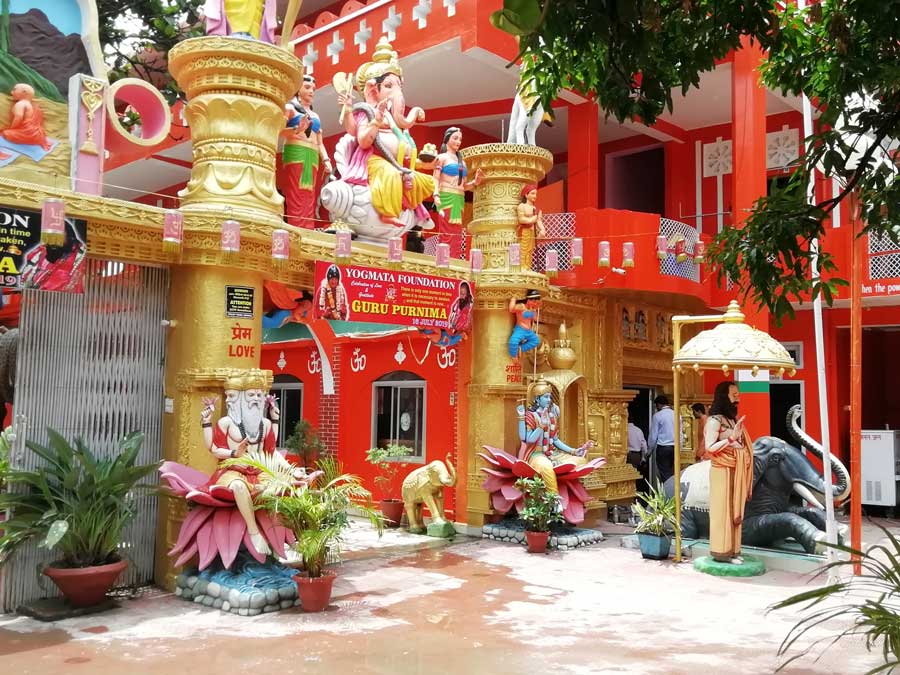
Two and a half years after receiving Guru-Diksha, I found myself at my Guru’s ashram in India, in the city of Haridwar. There I received two further initiations—Sanskar Diksha and Sankalp Diksha. These initiations, along with the opportunity to be in the presence of Gurudev, were the main reasons for my journey to India.
Many meaningful and interesting things happened during this pilgrimage. I could speak in detail about the Sanskar and Sankalp Dikshas I received there, but those experiences deserve separate stories of their own. Therefore, I will limit myself to a few fragments of my spiritual journey.
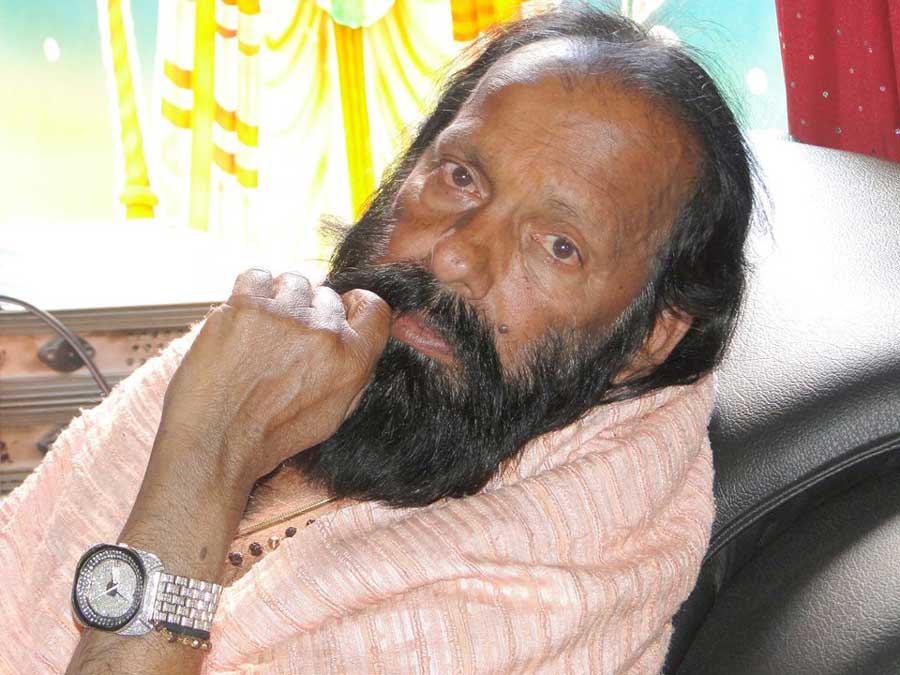
After the celebration of Guru Purnima, Babaji was planning to leave immediately—if I remember correctly, for Delhi. However, he remained in the ashram for another five days. There were many disciples and visitors, both Indians and foreigners. Each day Babaji sat with everyone. Sometimes he spoke, sometimes we simply sat in silence, but most often people approached him for blessings.
For many Hindus, visiting a holy person and receiving a blessing is almost a ritual—somewhat like confession and communion for Christians before Easter—so many people took photographs as keepsakes. Some arrived, others, having fulfilled their intention, moved on. Every day the ashram and the space around Babaji were full of people. So Babaji said that as long as there were people, he would remain in the ashram.
All those who gathered for Guru Purnima—this festival of honoring gurus and holy beings—created a special atmosphere. Despite the large number of visitors, the ashram dining hall fed everyone free of charge. On some days, people even had to eat outside, and the ashram was prepared for that as well. Everything was calm and well organized, and Babaji’s presence transformed the ashram into a true Вeva-Дoka—an abode of the gods.
The atmosphere of freedom and Babaji’s gentle, loving energies had a magical effect on everyone. Of course, many wished that Baba would stay longer, but people gradually began to leave, the crowd thinned, and eventually the time came for Babaji himself to depart.
That day he sat with everyone as usual, though we could already sense the movement that signaled his departure. I believe most of us felt in our hearts the signs of an approaching farewell to the Guru. Something similar is described in the Śrīmad Bhāgavatam in the episode of Krishna leaving Dvaraka.
Babaji rose from his armchair. Thanked everyone, and walked toward the car. Many disciples—mostly foreign students—went outside, hoping to prolong even a few more moments with the Guru. Babaji was already seated in the car, yet disciples continued to approach him, and through the open door he kept blessing them. I noticed that some had tears in their eyes. Eventually, the door closed and the car drove away. It was evening, and the Sun, much like Babaji, also seemed ready to close its doors and disappear beyond the horizon—until the next meeting.
After the Guru departed, I immediately went to the Ganga, sat quietly on its bank for a while, and decided not to delay my retreat into the dark room. (Dark rooms are spaces for meditation and samadhi practices in complete darkness. Babaji had given me permission earlier to stay in dark room.)
With Babaji departure, the ashram felt empty. Nothing held my attention anymore except practice. An hour or two later, I entered the dark room and prepared myself for practice.
I spent two nights and two days in the dark room. Just like the experiences of Sanskar and Sankalp Diksha, my stay there deserves a separate story, so here I will mention only the fact that it took place.
After leaving the dark room, there were still six days left before my departure from India. Together with my fellow travelers, I spent this time visiting the sacred places of Haridwar. We went to Har Ki Pauri Ghat—the place where Vishnu is said to have spilled a drop of Amrita, the nectar of immortality. We visited the Maya Devi Temple, a Shakti Peeth, the place where the navel and heart of Sati fell.
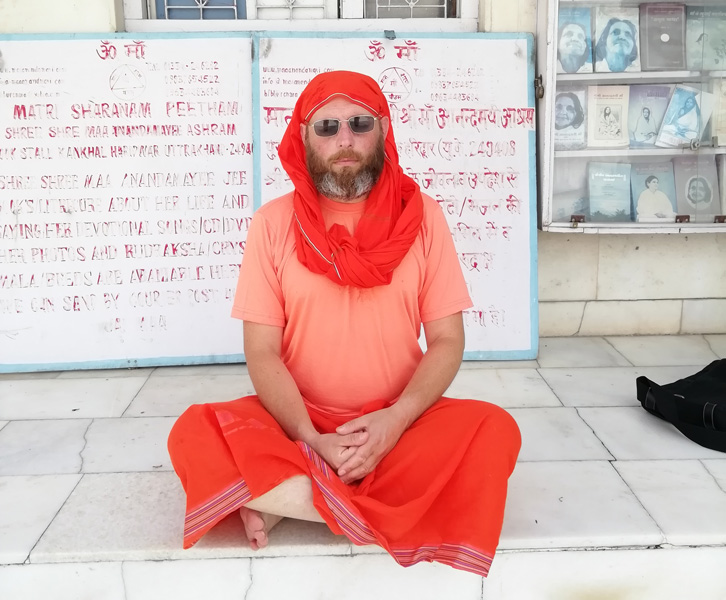
The Daksheshwar Mahadev Temple turned out to be only about a kilometer and a half from our ashram, so we visited it often. This is the place where Prajapati Daksha performed the famous fire yajna and where Sati sacrificed herself. Two temples are located there; it is a very special place. Nearby is also the ashram and memorial temple of the great modern saint Anandamayi Ma, built entirely of white marble.
There are also the Mansa Devi and Chandi Devi temples and many other sacred sites, but we did not have time to visit them all. At that time, a major religious festival was taking place in Haridwar, making movement around the city extremely difficult. In a city of around three hundred thousand residents, more than three million pilgrims had gathered, and entering or leaving the city was a challenge.
Public transportation was suspended during the festival, and private taxi drivers refused to take us to the Delhi airport. People joked that Lord Shiva did not want to let us leave Haridwar and wished us to stay longer. We would have gladly remained, but airlines follow their own rules. So we asked for blessings—from Shiva, from Mother India, and inwardly from Gurudev—for a safe return home.
We reached the airport about an hour and a half before check-in began. In the end, everything worked out well, even though the journey from Haridwar to Delhi Airport took us fifteen hours. Normally, taxi drivers cover this distance of just over two hundred kilometers in four to five hours.
We arrived home safely, and I immediately returned to my work.
Everyone perceives India—its culture and its ways—in their own manner. For me, India became a second home. I come from a village, so I do not require much comfort. Even the famous Indian dirt did not disturb me—perhaps there was little of it where I stayed, perhaps I simply did not notice it, or perhaps I had come for something entirely different.
India accepted me like a son, and I, in turn, accepted India. Every day, from the roof of the ashram, I looked toward the Himalayas and asked for their blessings. The people of India were kind and sincere, always ready to help without expecting anything in return.
In India, it was simple for me.